
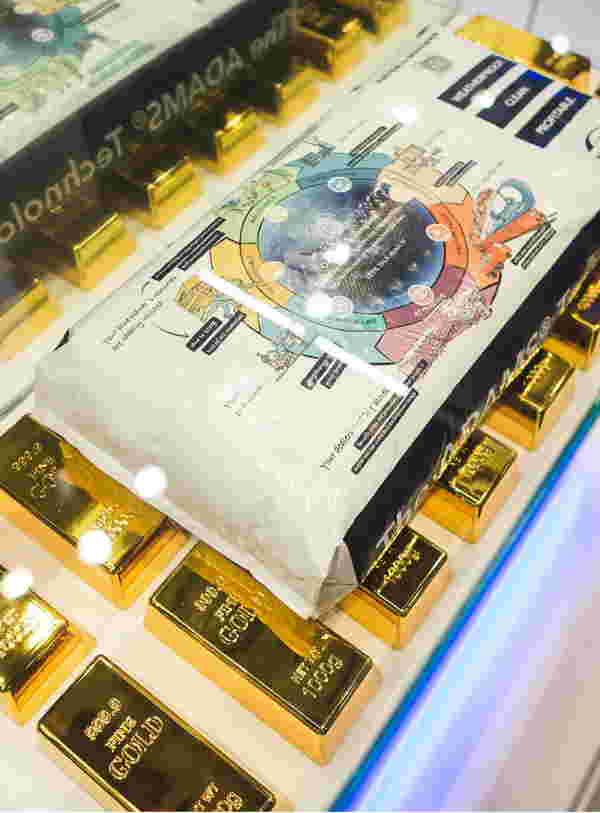

PE AS A VALUABLE RESOURCE
What is the collection campaign and why should you care?
Did you ever think companies would one day be scrambling for empty PET bottles? No? Neither did we, that is until we took a deeper look at the topic of recycling. In the meantime, it‘s clear: your plastic packa- ging material is a valuable resource!
You also have this valuable recycling opportunity lying dormant. With the ADAMS® technology, you fill powdered products into PE containers. And for good reason: this way the packaged product is best pro- tected until it is used by your end customers. The film bags are made of mono-material. Unlike a yogurt cup, where you have to separate plastic containers from the aluminum lid, an ADAMS® bag consists of only one directly recyclable material. Moreover, your ADAMS® bag can be completely emptied of residue, making it particularly suitable for recycling. How can your packaging material be returned to the recycling loop as a valuable material?
Are you successful collecting the film bag filled with an ADAMS® system as a recyclable material?We launched an experiment and showed that it is possible! We collected a total of 15 (!) tons of plastic cuttings, which Berry Global processed at the Steinfeld, Germany plant and used it for the production of new film bags.
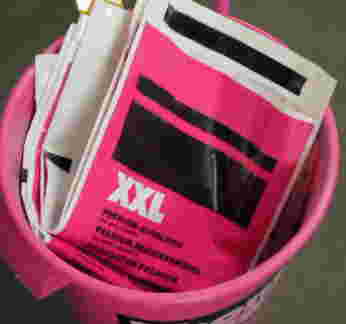
EMPTY
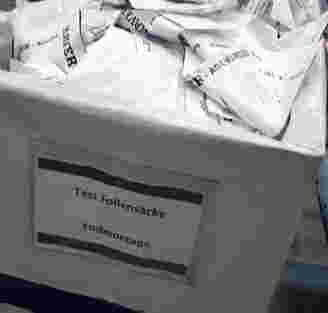
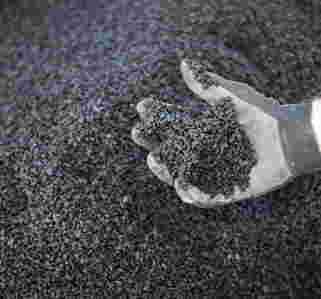
RECYCLATE
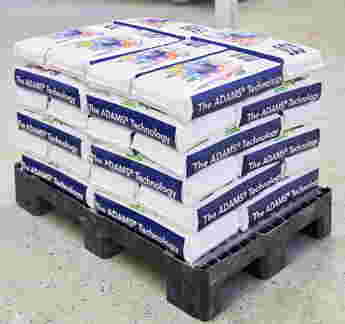
NEW BAGS
The Deutsche Umwelthilfe (German Environmental Aid) has it in writing: „Fundamentally, reusable bags would most likely be the most environmentally friendly solution.”
When new bags are delivered, the empty bags could simply be taken away again and then refilled. If this is not possible, it would be important to en- sure recyclability and a high use of recyclates in the bags.
Composite materials are therefore, in our estima- tion, rather less suitable. [Therefore] [...] the pure PE bag is the best option if reuse is not possible.In addition, attention should be paid to the lowest possible material use and large filling sizes.“
Some of you are already convinced of the ad- vantages today. In the meantime, more than 200 ADAMS® plants worldwide fill elaborately manu- factured powder products day after day. In 2014, we even won the Sustainability Award from Lafarge with the ADAMS®, particularly because of the sus-tainable packaging. Nevertheless, we and our partners are con- fronted time and again with the thoroughly negative reputation of plastic. So the same ap- plies here: The material must be returned to the recycling loop!
Recycling companies gratefully accept this recy- clable material - this we have learned in personal conversations. Recycling is increasingly becoming a real opportunity; large and successful retail groups even see this as a strategic addition. We are also seeing this trend in the construction materials sec- tor. For example, Heidelberg Materials, a leading manufacturer of construction products, announced at the end of November, 2022, that it would take over a Berlin-based construction materials recycling company in order to „significantly strengthen its activities relating to the circular economy,“ accor- ding to a press release. In mid-December this was followed by the announcement of the acquisition of a leading recycling and construction materials company in the UK.
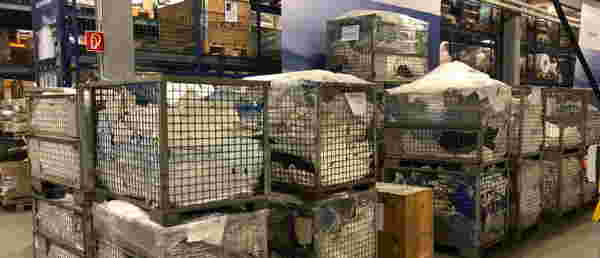
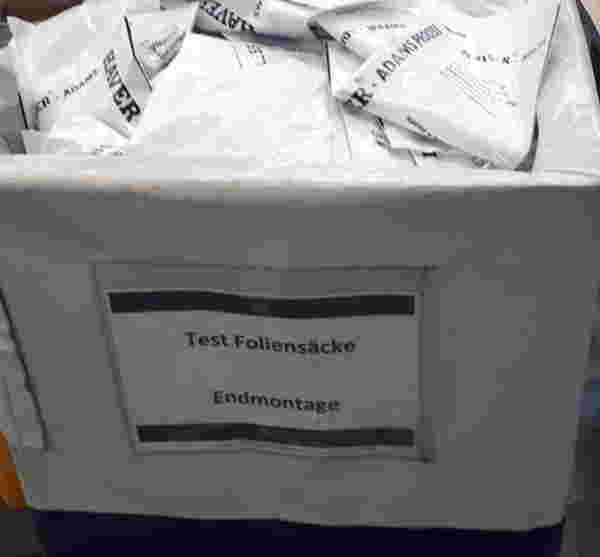
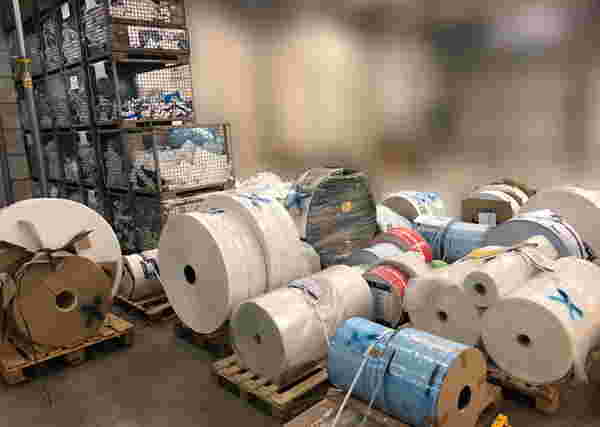
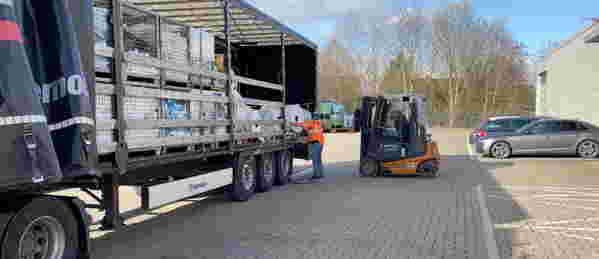
Our campaign could now begin. We were delighted to see that all the colleagues invol- ved immediately understood it made sense to collect this recyclable material. They enthusia- stically gathered all the scrap film and collected them in mesh boxes. Months passed before we ended up with a huge mountain of plastic cut- offs. It was unbelievable to see what recyclable material was collected in that time! Our forklift driver and truck driver had fun loading the plastic scrap onto a tractor-trailer. Of course,at this point they were wondering what would happen to the material and what would be done with it. Rubber boots? Flower pots? Park benches? In any case, the driver set off for his destination with 15 tons (!) of scrap material. When it arrived at Berry, the film scrap waswashed, shredded and processed into regra- nulate. Then, with the addition of 50% virgin material, a new tubular film was produced for use with our ADAMS® lines. We could hardly wait to see the result. Finally the time came and we were able to hold it in our hands - our high-quality new bag made from 50% recycla- te for packing powdered bulk materials! Andat that moment we knew we had done it and closed the loop! With our collection campaign, we showed that collecting and recycling can be so simple and that film is a sustainable form of packaging that is fit for the future.

SUSTAINABILITY FOR A FUTURE WORTH LIVING
Sustainability is a core value for us: We make decisions with long-term consequences in mind for the HAVER & BOECKER family, for the entire universe of our customers and for the well-being of future generations. We follow this fundamental approach and strive with all‘ our technologies to improve the living conditions for Mankind.This is our mission!
Container for the scroll indicator
(Will be hidden in the published article)
Container for the dynamic page
(Will be hidden in the published article)
Container for the dynamic page
(Will be hidden in the published article)